Glyph orientation and joining behaviour in vertical text
Nobody has claimed this yet.
Assessment
- Difficulty
- 5/5
- Estimated time
- Over a week
- Newbie friendliness
- 25/100
- Issue type
- Feature
- Clarity
- Needs clarification
- Activity status
- Stale
- Tech stack
- css
- Domain
- internationalization
Research direction
Start with the issue description and the linked Odeon example, comparing the documented vertical Arabic and Persian layouts. Review the stated questions about CSS, SVG, Web pages, and eBooks, then determine whether upright isolated glyphs with attached diacritics should be recorded as a Web technology requirement; done means reaching and documenting a clear conclusion.
Written by the indexing model from the issue text.
Description
There are certainly attested instances of lines of Arabic script text that run in a vertical direction on book spines and the like. In such cases, the text is all joined up and glyphs are rotated so that the text flows as normal, and just the line orientation is changed.
What is not clear is whether there is a requirement for supporting Arabic script text, for Arabic & Persian, in vertical lines in a way which is more like Chinese or Japanese, ie. with upright letter forms.
However, there are also attested cases of Arabic text arranged vertically with the letters upright, for example in signboards for cinemas or theatres. It is not clear, at this point whether this should be regarded as a standard approach for Arabic text, and one for which support is needed in CSS, SVG, and other technologies, or whether this is just an unusual layout that mimics Western typographic approaches. Here is an example outside a movie theatre:
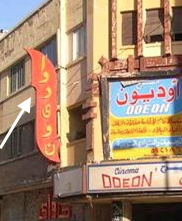
The following should be noted:
- Letters flow from top to bottom (as with Latin script)
- Isolated forms of letters are used.
- Diacritic marks, if any, should be applied to letters and not appear on separate lines.
This issue asks the question: Is there a need to support this latter layout for Web pages and eBooks, using W3C technologies?
- Dominant language
- HTML
- Stars
- 71
- Forks
- 23
- PR merge metrics
- No merged PRs in 30d
Contributor guide
First steps
- Read the whole issue, then the project's contributing guide.
- Comment on the issue to say you are picking it up — it saves two people doing the same work.
- Fork the repository and make your change on a branch.
- Open a pull request that references the issue number.
More from w3c/alreq
-
Difficulty 1/5 Under an hour Newbie friendliness 72/100
-
Swash form in alreq Openi:justification
Difficulty 1/5 Under an hour Newbie friendliness 55/100
-
i:bidi_text i:interaction l:arb l:ks l:ku l:pes l:ug l:ur question
Difficulty 5/5 Over a week Newbie friendliness 25/100
-
i:data_formats l:arb l:pes question s:arab
Difficulty 3/5 1-2 days Newbie friendliness 30/100
-
doc:arfa gap i:fonts l:ks p:basic s:arab
Difficulty 5/5 Over a week Newbie friendliness 25/100
Similar issues
-
category/ui priority/P3 scope/settings scope/web-shell type/bug
Difficulty 2/5 Half a day Newbie friendliness 85/100
-
Difficulty 2/5 1-3 hours Newbie friendliness 82/100
CherryHQ/cherry-studio#20799 · 1 reaction ·
-
bug
Difficulty 2/5 Half a day Newbie friendliness 84/100
justwheel/toph-hugo-theme#88 ·
-
bug ready-for-dev
Difficulty 2/5 1-3 hours Newbie friendliness 82/100
-
bug
Difficulty 2/5 1-3 hours Newbie friendliness 82/100