microsoft / microsoft/TypeScript
TS Language Server: JSX Attribute types autocompletion
Dieses Issue hat noch niemand übernommen.
- Vorherrschende Sprache
- Go
- Sterne
- 111k
- Forks
- 14.3k
- Ø Merge
- 2 T. 4 Std.
- Gemergte PRs (30 T.)
- 132
Beschreibung
Search Terms
-
autocomplete
-
autocomplete proptypes
-
autocomplete jsx attribute types
-
proptypes
-
jsx intellisense
Suggestion
The TS Language Server should have proper insert text mechanisms to handle react props.
There are maybe 4 Scenarios in which we can type PropTypes in React/JSX
Use Cases
This would be used to make editing experiences much quicker, especially in react/JSX markup. Webstorm has this feature by default. I would like this feature added to VSCode so I can continue to use a snappier editor, while having just as important intellisense features in it. That and almost 100% of my coworkers also use VSCode, so I want to use the same tools they are.
Shortcomings with current Approach:
The current way would be to have auto complete suggest prop types as you type them, or with the ctrl + space key shortcut. You would have to do this for every required prop type, which is a significant slow down. If every required prop type is auto inserted I never have to worry about it (and won't have to worry about required props, even during compile time!)
Examples
-
const Component = (props: PropDefinition) => <JSX /> -
const Component: React.FC<PropDefinition> = (props) => <JSX /> -
class MyComponent extends React.Component<PropDefinition> -
MyComponent.propTypes = PropTypesObject
even though the fourth case would only ever occur in Vanilla JS files, I would expect the following behavior to be the same.
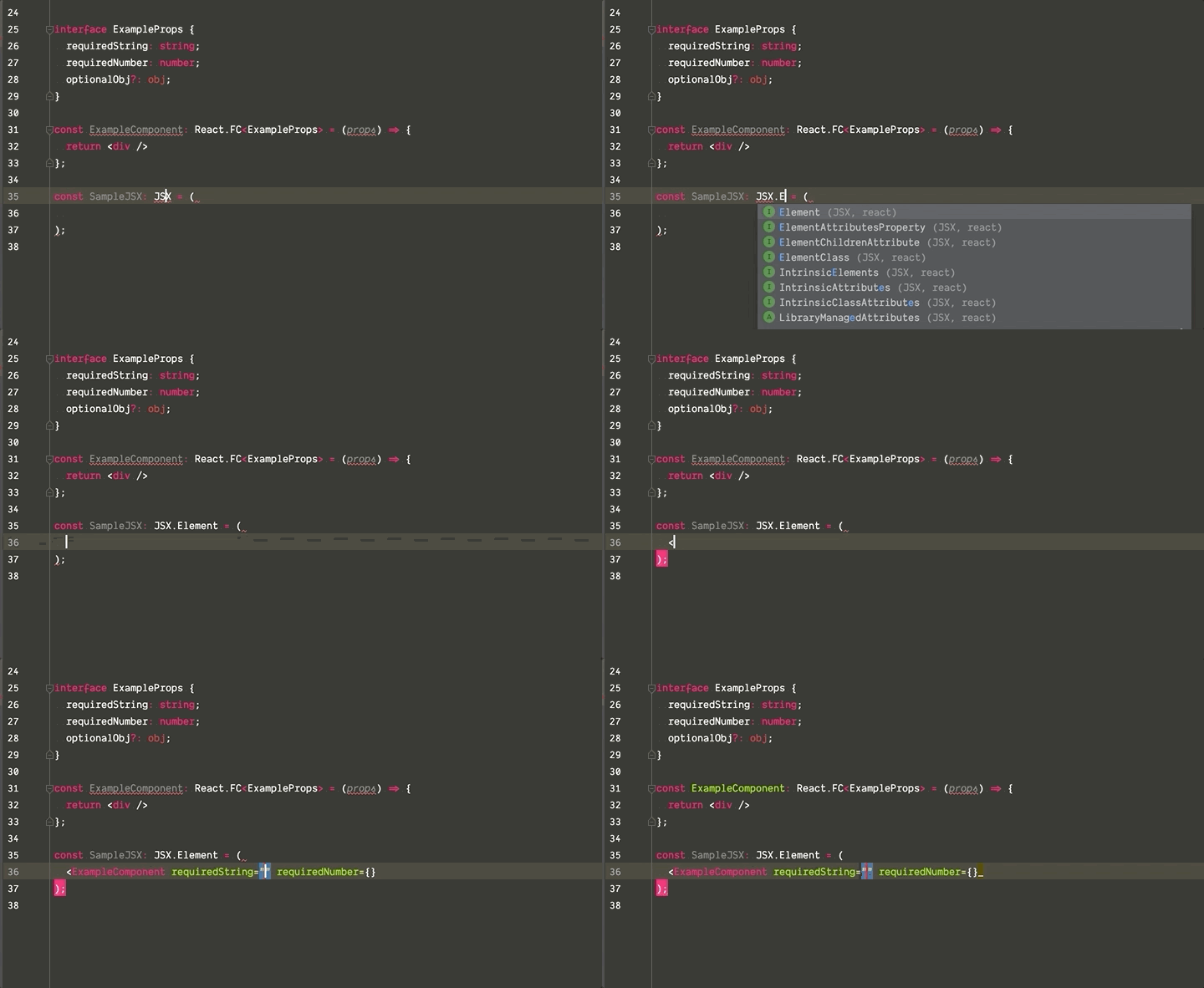
I would like the expected behavior to do the following
-
types:
<MyCompo... -
Auto Completes with a suggestion from the completion list
-
Completion Inserts:
<MyComponent requiredProp1={<cursor placed here>} requiredProp2={}while omitting optional props.
Checklist
My suggestion meets these guidelines:
- [ X ] This wouldn't be a breaking change in existing TypeScript/JavaScript code
- [ X ] This wouldn't change the runtime behavior of existing JavaScript code
- [ X ] This could be implemented without emitting different JS based on the types of the expressions
- [ X ] This isn't a runtime feature (e.g. library functionality, non-ECMAScript syntax with JavaScript output, etc.)
- [ X ] This feature would agree with the rest of TypeScript's Design Goals.
Beitragsleitfaden
Erste Schritte
- Lies das ganze Issue und danach den Beitragsleitfaden des Projekts.
- Schreib ins Issue, dass du es übernimmst — das erspart doppelte Arbeit.
- Forke das Repository und arbeite in einem Branch.
- Öffne einen Pull Request, der die Issue-Nummer nennt.
Rechercherichtung
Das Issue nennt keine Quelldatei, keinen Test und keinen spezifischen Einstiegspunkt. Reproduziere die vier React/JSX-Prop-Fälle, verfolge dann die Vervollständigung von JSX-Attributen im TypeScript-Sprachserver und vergleiche das aktuelle Verhalten mit dem angeforderten Einfügetext. Erledigt ist die Aufgabe, wenn erforderliche Props mit Cursorplatzierung eingefügt werden, während optionale Props in den genannten Fällen weggelassen werden.
Vom Indexierungsmodell aus dem Issue-Text verfasst.
Bewertung
- Tech-Stack
- javascript, react, typescript
- Bereich
- developer-experience, tooling
- Issue-Typ
- Feature
- Schwierigkeit
- 5/5
- Geschätzter Aufwand
- Über eine Woche
- Aktivitätsstatus
- Veraltet
- Klarheit
- Größtenteils klar
- Anfängerfreundlichkeit
- 30/100