FormidableLabs / FormidableLabs/react-native-app-auth
Android: opt-in Partial Custom Tab (bottom-sheet) for the authorization flow
Nessuno ha ancora preso questa issue.
- Lingua principale
- Java
- Stelle
- 2.3k
- Fork
- 473
- Metriche di merge delle PR
- Nessuna PR unita negli ultimi 30g
Descrizione
Problem
On iOS, the authorization flow opens as a modal sheet over the host app via
ASWebAuthenticationSession. The user never feels like they've left the app:
the host's wallpaper is visible behind the sheet, animations are continuous,
and dismissal returns control to the same screen.
On Android, the equivalent flow opens a Chrome Custom Tab in full-screen
mode. The host activity is fully obscured. To users this reads as "the app
opened a browser" rather than "the app is asking me to sign in," which is
both a UX downgrade vs. iOS and a real cognitive interruption — especially
on the first sign-in / connect-account flow.
| iOS (today, no library change) | Android (today, no library change) |
|---|---|
 |
Full-screen Chrome Custom Tab — fully obscures the host app. |
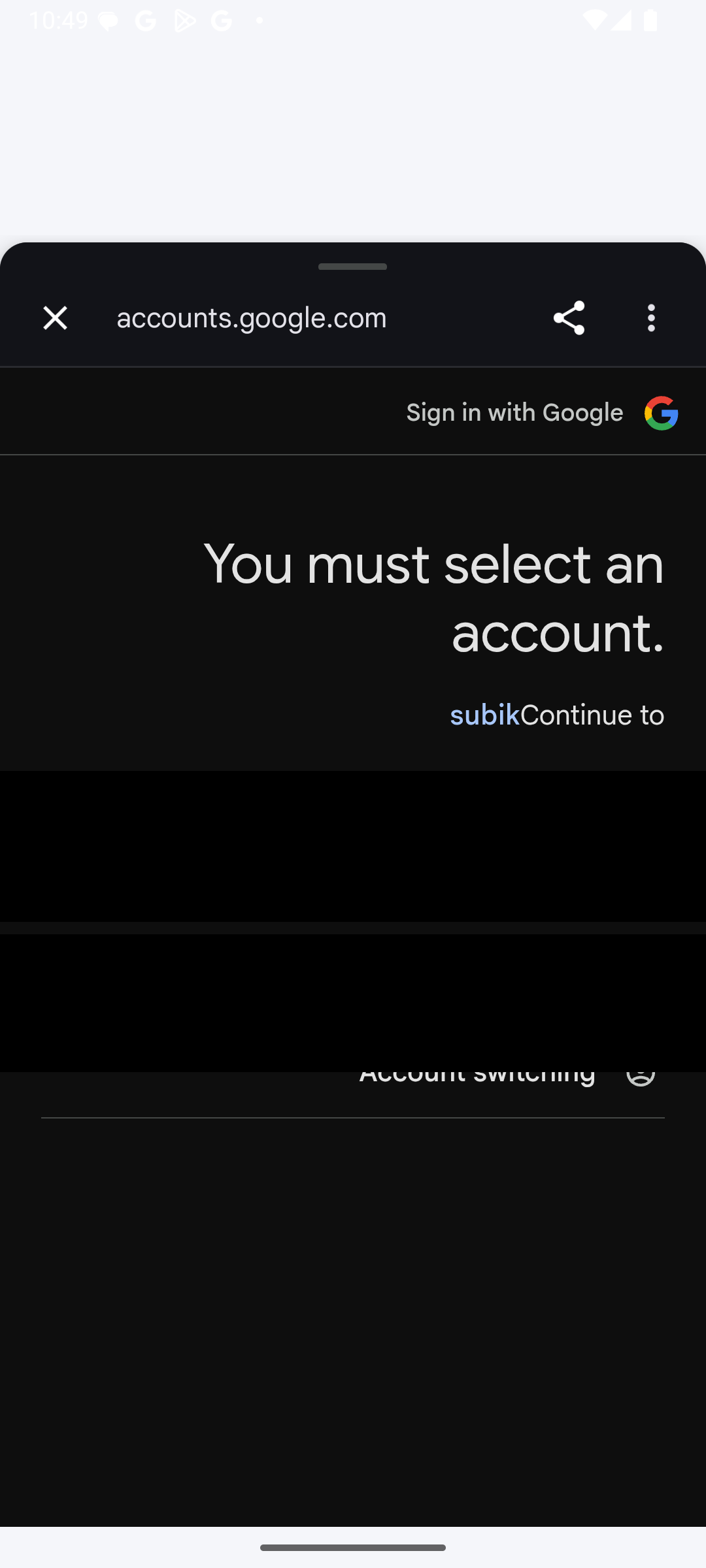
Chrome 107 (Oct 2022) shipped the Partial Custom Tabs API
that closes this gap: it renders the Custom Tab as a user-resizable
bottom sheet at a caller-specified initial height. With it, the Android
side can match iOS's modal feel:
| Android with Partial Custom Tab (this proposal) |
|---|
 |
The feature is opt-in (default behavior unchanged) and gracefully degrades:
older Chrome silently ignores the extra and falls back to the full-screen
Custom Tab — i.e. zero regression risk for users on Chrome < 107.
Proposal
Add one optional AuthConfiguration field, Android-only:
androidCustomTabPartialHeightFraction?: number; // (0, 1]
Semantics:
- Unset (default) — no change.
CustomTabsIntent.Builderis built as
today; Chrome renders the full-screen Custom Tab. - Set to a fraction in
(0, 1](e.g.0.85) — between
authService.createCustomTabsIntentBuilder()and.build(), the library
callssetInitialActivityHeightPx(displayHeight * fraction, CustomTabsIntent.ACTIVITY_HEIGHT_ADJUSTABLE). Chrome 107+ renders the
bottom sheet; older Chrome ignores the extra and falls back to
full-screen. The activity stays user-resizable to full screen via the
drag handle (ACTIVITY_HEIGHT_ADJUSTABLE). - Skipped when
androidTrustedWebActivityis true (TWAs intentionally
render full-screen).
A fraction is preferred over raw pixels because it's display-agnostic — the
caller doesn't have to reach for Dimensions.get('window').height or worry
about dp vs. px. Chrome enforces a 50% floor internally, so values
below that are auto-clamped by Chrome (this is documented behavior, not a
library concern).
Implementation notes
- androidx.browser bumps
1.4.0 → 1.5.0for the
setInitialActivityHeightPxAPI. The bump is API-compatible and 1.5.0
has been stable since late 2022. - First-launch warmup caveat (worth documenting next to the new option):
Chrome's Partial CCT requires theCustomTabsIntent.Builderto be
constructed with an establishedCustomTabsSessionto render as a
bottom sheet on the first invocation. Otherwise Chrome's first launch
falls back to full-screen and only subsequent launches get the sheet.
The library already exposes
prefetchConfiguration— calling
it on the screen that will later invokeauthorize()is sufficient
(verified on a real Pixel emulator running Chrome 147). The PR's docs
update mentions this explicitly. - No iOS counterpart needed —
ASWebAuthenticationSessionalready
presents as a modal sheet by design. The new option is silently ignored
on iOS (guarded byPlatform.OS === 'android'). - No tests need mocking the native side — the JS layer's
responsibility is validation + correct positional argument to the
native bridge, both covered by spec additions.
Backward compatibility
- Field is optional with default
null(no behavior change when unset). - Existing API surface untouched: no field renamed, removed, or whose
meaning shifted. - Existing tests pass after pinning the new positional arg.
- Older Chrome / older Android versions: extra is ignored by Chrome, no
crash, falls back to current full-screen Custom Tab behavior.
PR
A PR with the full implementation (TS types, JS validation, Java wiring,
README/docs, 5 new spec tests covering validation + bridge passthrough,
plus a changeset for the minor bump) is ready and will be linked below.
Happy to iterate on the API shape (e.g. accept an object form, expose
resizeBehavior, etc.) if maintainers prefer a different surface.
Guida per i contributori
Apri la guida per i contributori
Come iniziare
- Leggi tutta la issue e poi la guida ai contributi del progetto.
- Commenta sulla issue per dire che te ne occupi tu — evita che due persone facciano lo stesso lavoro.
- Fai un fork del repository e lavora su un branch.
- Apri una pull request che faccia riferimento al numero della issue.
Direzione di ricerca
Inizia da AuthConfiguration e authorize(), quindi segui authService.createCustomTabsIntentBuilder() fino al bridge Java. Esamina la suite di spec esistente e i cinque casi proposti di validazione e passthrough del bridge. Il lavoro è completato quando l'impostazione Android opzionale viene validata e trasferita, la documentazione copre prefetchConfiguration e il comportamento esistente rimane invariato.
Scritto dal modello di indicizzazione a partire dal testo della issue.
Valutazione
- Stack tecnologico
- android, java, react-native, typescript
- Ambito
- authentication, mobile
- Tipo di issue
- Funzionalità
- Difficoltà
- 4/5
- Tempo stimato
- 3-5 giorni
- Stato di attività
- Tranquilla
- Chiarezza
- Abbastanza chiara
- Idoneità per principianti
- 35/100