obophenotype / obophenotype/uberon
Ensure definitions of vessels precisely define boundaries
Nobody has claimed this yet.
- Dominant language
- Emacs Lisp
- Stars
- 163
- Forks
- 43
- Avg merge
- 1d 17h
- Merged PRs (30d)
- 5
Description
Consider the relationship of the lingual artery (L) to the external carotid (EC):
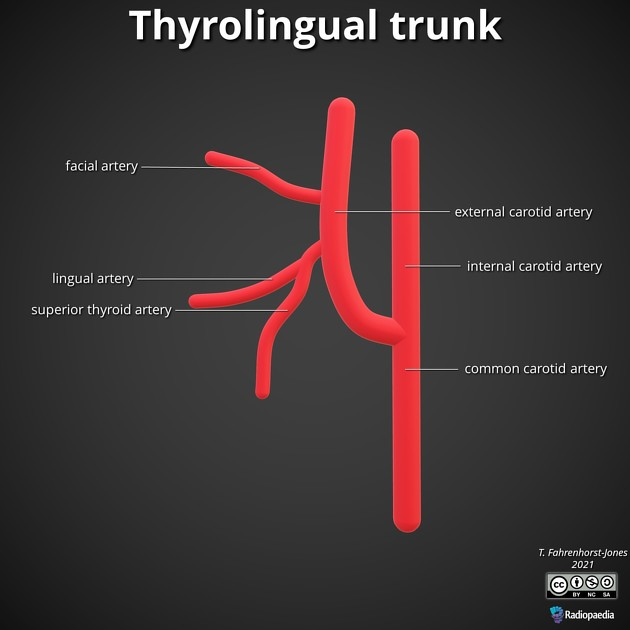
According to the scheme here, we have two (equally valid IMO) ways to model this mereologically
https://github.com/obophenotype/uberon/wiki/Branching-structures-Design-Pattern
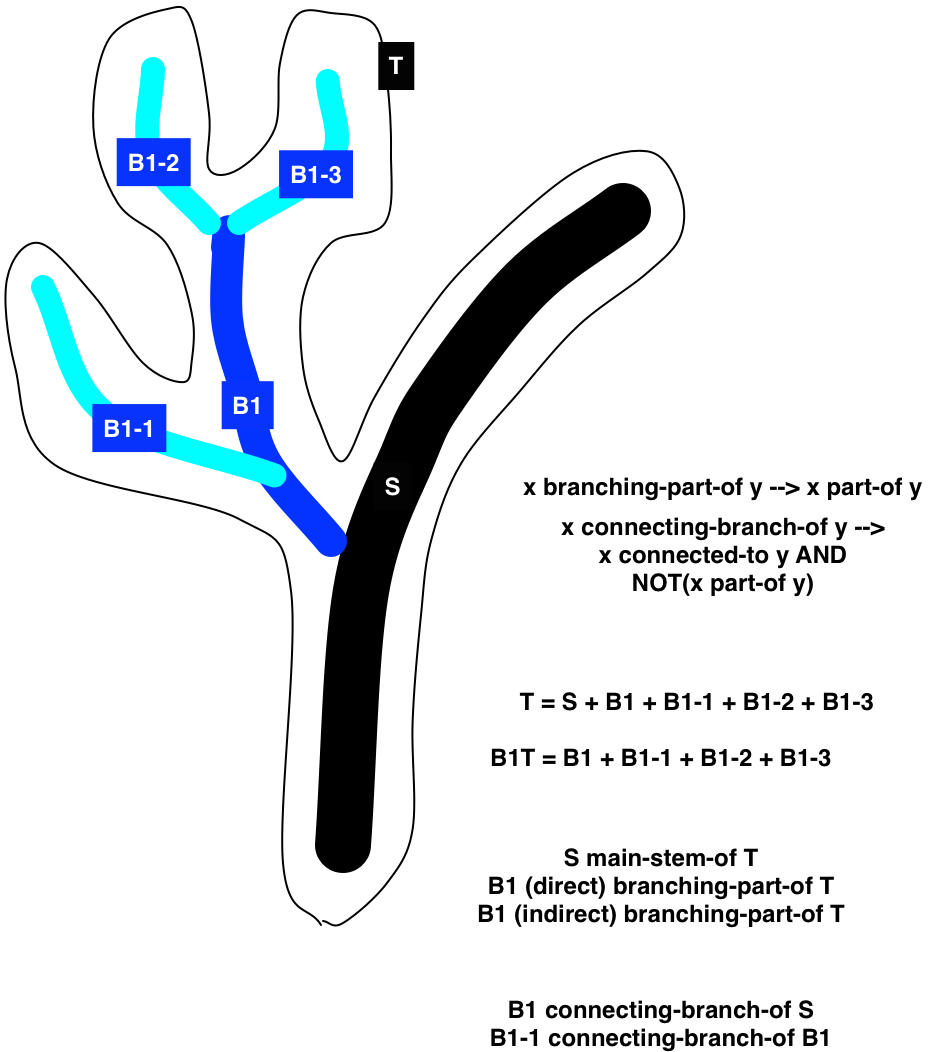
- L connecting-branch-of EC:
- The segment of the EC that is shown above is morphologically a tube
- L is also a tube
- L is not part of EC
- more specifically, L and EC share no parts
- L and EC are adjacent, and more specifically they connect and allow the flow of blood from the EC to the L
- L branching-part-of EC:
- The segment of the EC that is shown above is morphologically a tree
- L is a part of EC.
- more specifically, L is a branching part of EC
- There is an implicit (unnamed) structure that is the "stem" of the EC (corresponding to the concept of EC in 1 above).
In pragmatic terms, if we have a enthothelial cell in L, then if we follow 1, that cell would not be returned in a query for all cells in the EC. If we follow 2, the cell would be returned in this query.
Currently in the ontology many of the text definitions don't make it clear which of the above models are followed. In some cases, logical axioms may force an interpretation, but this is not super-clear to people using uberon who are not experts in OWL and RO
We should go through the ontology and make it very clear what our boundary commitments are. This is difficult as I think some of the concepts are inherently fuzzy. This task should also be done in concert with a strategy for checking the entailments.
One possibility is that we follow FMA and make two concepts and have two hierarchies for tubes and trees. This may make the ontology harder for general use, but easier for precise use.
Contributor guide
First steps
- Read the whole issue, then the project's contributing guide.
- Comment on the issue to say you are picking it up — it saves two people doing the same work.
- Fork the repository and make your change on a branch.
- Open a pull request that references the issue number.
Research direction
Read the issue's branching-structures design pattern and compare the two proposed boundary models for vessel concepts. Then identify how current definitions and logical axioms encode those boundaries and develop an entailment-checking strategy; done means the ontology's boundary commitments are explicit and consistently verifiable.
Written by the indexing model from the issue text.
Assessment
- Domain
- content
- Issue type
- Refactor
- Difficulty
- 5/5
- Estimated time
- Over a week
- Activity status
- Stale
- Clarity
- Needs clarification
- Newbie friendliness
- 20/100